
8 ways to prepare 24 hours before a hurricane in the Caribbean
Every year, the hurricane season, which runs from June to November, exposes Caribbean communities to major challenges : strong winds, flooding, power outages, and temporary isolation. Yet the final 24 hours before a hurricane’s arrival are often critical for protecting your family, securing your home, and reducing potential damage.
Essential hurricane preparedness tips
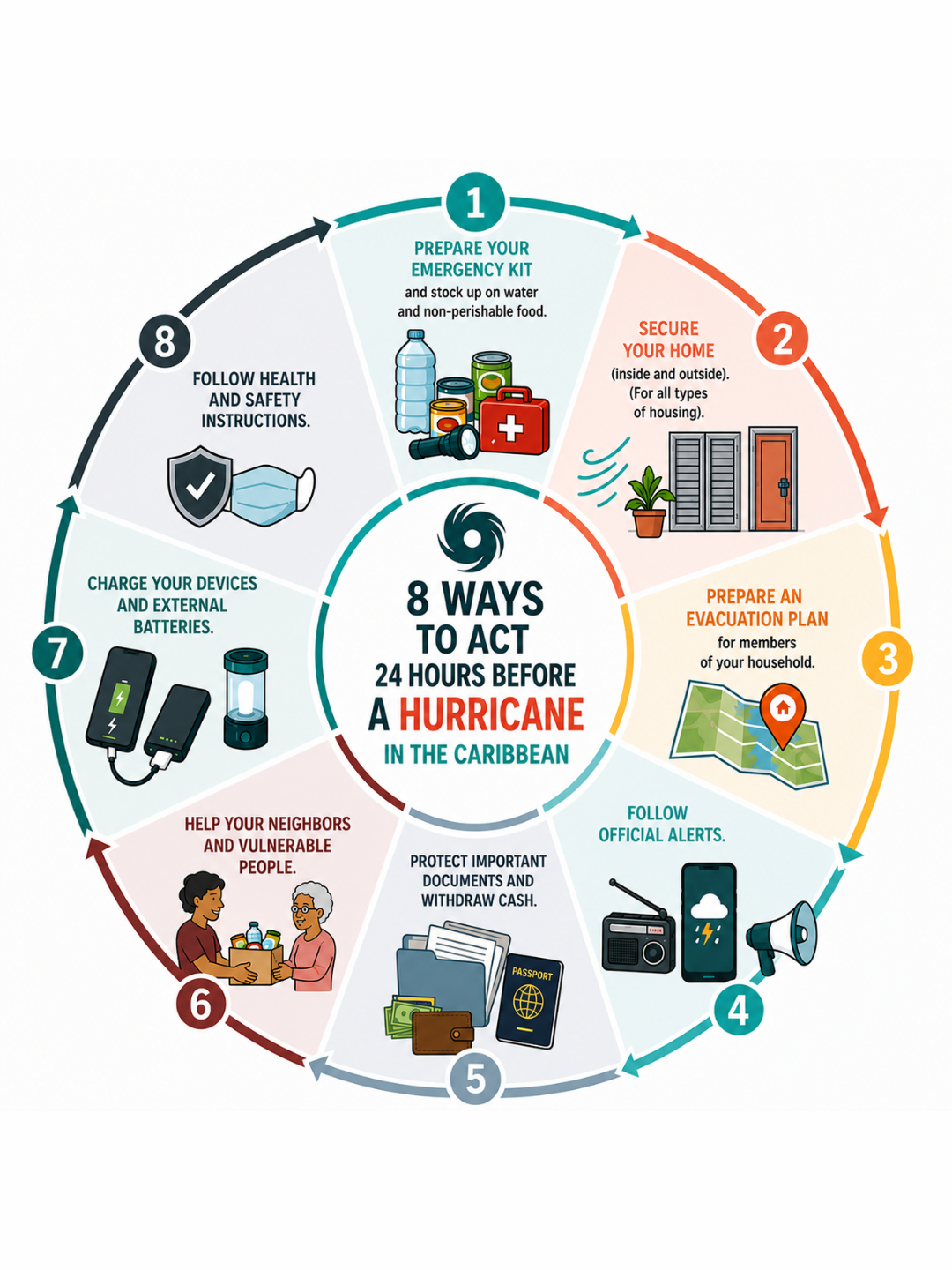
Here are 8 essential actions to take before a hurricane strikes :
1. Prepare your emergency kit and stock up on water and food
Before a hurricane reaches your area, make sure you have an emergency kit that will allow you to be self-sufficient for at least 72 hours.
You can find the complete and detailed contents of the kit here.
During a hurricane alert, stores can quickly run out of supplies. Preparing in advance helps avoid shortages and unnecessary travel.
2. Secure your home
Hurricane-force winds can turn outdoor objects into dangerous projectiles. Before the hurricane arrives, take the time to :
- Check your roof
- Close and protect your windows
- Bring outdoor furniture inside
- Secure or store lightweight objects
- Clean your gutters
A well-secured home significantly reduces the risk of damage.
3. Prepare a shelter plan for your household
If your home is located in a flood-prone area or is structurally vulnerable, it is essential to identify a safe place within your home or plan for possible relocation to a shelter in your neighborhood.
Therefore, it is important to prepare a sheltering plan and identify:
- Where to take shelter in your home or in another safe location (school, shopping centre, workplace, etc.)
- What to do
- What to bring
- Who to contact
4. Charge your devices and backup batteries
Power outages are common during hurricanes.
Before the hurricane arrives:
- Charge your mobile phone
- Prepare power banks
- Charge rechargeable equipment (flashlights, batteries, etc.)
5. Follow official alerts
Official information evolves as the hurricane develops. These updates provide information on alert levels and the actions you should take.
Stay informed through:
- Local radio and television stations
- Official text messages, sirens, and notifications
- Official social media accounts
- Communications from local authorities
To better understand how alerts are issued and why it is important to follow them, watch our video :
6. Protect important documents and withdraw enough cash
Important documents are often lost, damaged, or rendered unusable after a hurricane. Make copies of your ID card/passport, driver’s license, family records, insurance documents, prescriptions, and other essential documents. Store them in a waterproof pouch and/or keep digital copies.
ATMs and payment terminals may become unavailable after a hurricane. Withdraw enough cash in advance and store it in a safe, waterproof location.
7. Help your neighbors and vulnerable people
Solidarity plays a vital role during disasters.
Remember to:
- Check that elderly neighbors are prepared
- Inform isolated people and ensure they have access to essential information
- Share official information through social media and text messages
- Help secure homes
A prepared community is more resilient to extreme events.
8. Follow health and safety instructions
In addition to official sheltering instructions, it is important to follow guidance issued by authorities to reduce the risk of injury, accidents, and health problems. Make sure you have enough drinking water and non-perishable food, keep medications and prescriptions on hand, and pay special attention to vulnerable people, including young children, older adults, people with illnesses or disabilities, and pregnant women.
Tip : Follow official social media accounts before the hurricane season begins.