How to talk to children about natural hazards ? avec les enfants ?
In the Caribbean, children grow up in territories exposed to hurricanes, earthquakes, volcanic eruptions, floods and tsunamis. Yet many parents are reluctant to discuss these topics, either because they are afraid of worrying their children or because they do not know how to approach the subject.
Raising children’s awareness of natural hazards is not about frightening them, but about giving them the tools they need to respond better in the event of an alert. This prevention work also helps strengthen the resilience of the whole family.
Why is it important to raise children’s awareness of natural hazards?
Natural hazards are an everyday reality in Caribbean territories. A child may face a disaster at school or at home, so it is important that they know how to recognise an alert, understand safety instructions and adopt safe behaviours. Teaching these concepts from an early age helps reduce stress and risky behaviours. Knowing where to take shelter, how to contact a responsible adult or how to behave during an earthquake, for example, can make the difference between a controlled response and panic.
Furthermore, the intensification of extreme events linked to climate change makes passing on this knowledge even more crucial. Educating children is not only about preparing for an immediate response: it also helps build a lasting culture of risk awareness that benefits households by making their members better prepared in the long term.
“For us, it is essential to raise children’s awareness so that they are not potential passive victims, but agents of change. By learning about natural hazards, they develop protective reflexes, know how to respond and can even help save lives.” Daniel, Disaster Risk Reduction Specialist at the Dominican Red Cross.
Children are often the best ambassadors for prevention
Children naturally talk about what they learn, remind their families of safety instructions, encourage household preparedness and help spread a culture of risk awareness.
Micheline, a volunteer with the French Red Cross territorial delegation in Guadeloupe, regularly sees this during Paré Pa Paré activities:
“Very often, it is children who help their parents become aware of the risks. Adults sometimes live in denial, whereas children listen, understand and then pass the messages on at home.”
Daniel, Dominican Red Cross:
“Children also have a real multiplier effect: they naturally pass this knowledge on to their families and those around them. Educating younger generations about prevention means building a more resilient society.”
Children easily remember what they are taught and share it with those around them. At school or during workshops, they discuss images and activities with one another, then bring this information home. This role as messengers is invaluable.
Beyond this role, educating children gives them a sense of effectiveness. Knowing that they can help, for example by alerting an adult, following a simple instruction or preparing their own emergency kit, strengthens their confidence. This ability to take action transforms potential anxiety into an ability to make a concrete contribution to collective safety.
How can we talk about risks without frightening children?
To raise children’s awareness of disaster risks without worrying them, it is recommended to use language adapted to their age, concrete examples and playful approaches. By explaining what can be done to stay safe, take shelter, follow adults’ instructions, identify safe places or prepare an emergency kit, children can perceive the situation as something they can manage.
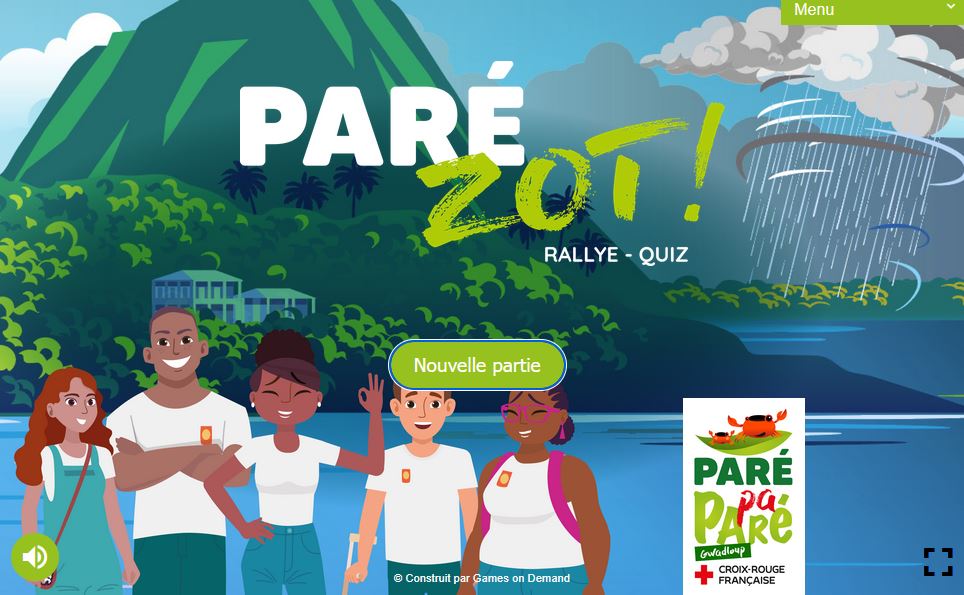
Many educational resources are already available and can be used at home or at school. For example, you can find age-appropriate quizzes on PIRAC’s Instagram and Facebook accounts, as well as online games such as Paré Zot, to learn more about natural hazards in Guadeloupe.
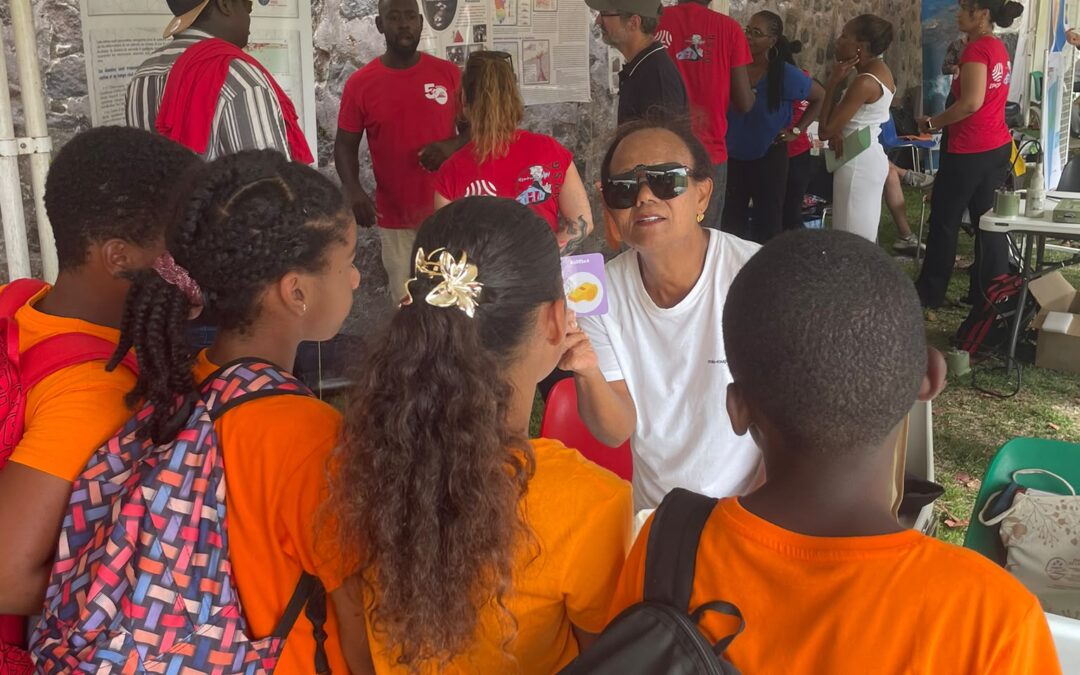
Another way to raise children’s awareness is to take part in events organised by different organisations across the region, such as the Red Cross. These opportunities for discussion allow children to discover the right safety behaviours in a practical way through interactive workshops and demonstrations.
During an awareness-raising session organised as part of the Fok Nou Paré project in Martinique, at a school, playful and participatory approaches were offered to students and teachers. At the end of the session, a teacher highlighted the value of these educational methods:
“I find that it is more visible for them [the children]. They have the images, they do activities, we put them in real-life situations.”
These playful and participatory approaches help introduce prevention in a positive way, without dramatising the risks.
“Games allow us to talk about risks in a different way, and it works.” Micheline, volunteer at the Paré Pa Paré stand during the 50th anniversary of La Soufrière (Guadeloupe).
She has observed that after these kinds of activities, many children now know what to put in an emergency kit or how to behave when an alert is issued. A variety of activities therefore makes learning engaging and memorable. Children make the messages their own and can explain them in their own words. Board games and quizzes turn learning into a fun and interactive experience.
Initiatives developing a culture of risk awareness across the Caribbean
Several projects are being carried out by PIRAC with this goal, in partnership with the Ministry of Education and Caribbean Red Cross Societies.
For example:
- Fok Nou Paré in Martinique;
- Paré Pa Paré in Guadeloupe;
- Get Ready With Me in Saint Martin and Saint Barthélemy;
- A “DRR in School” initiative led by the Red Cross Societies of Dominica and the Dominican Republic.
Further reading