In the Caribbean, disasters do not always occur in isolation; this is what is known as multi-risk. They can occur in succession, accumulate, or even exacerbate one another.
What is multi-hazard ?
Usually, risks are categorized into broad themes (natural, biological, technological, societal) based on the nature of the hazard.
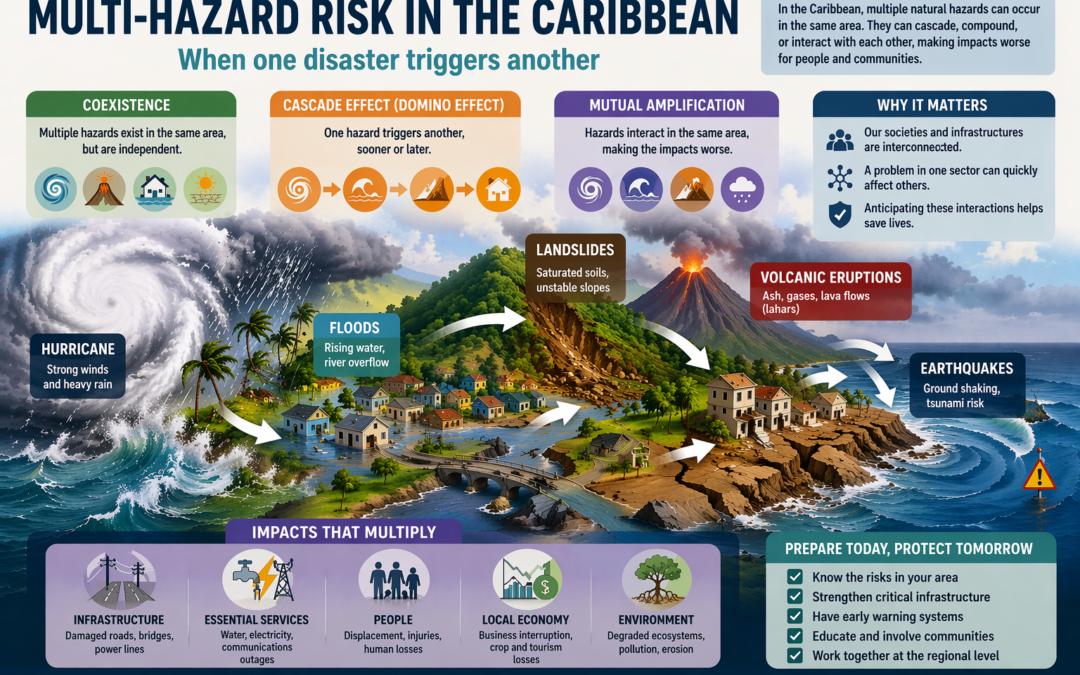
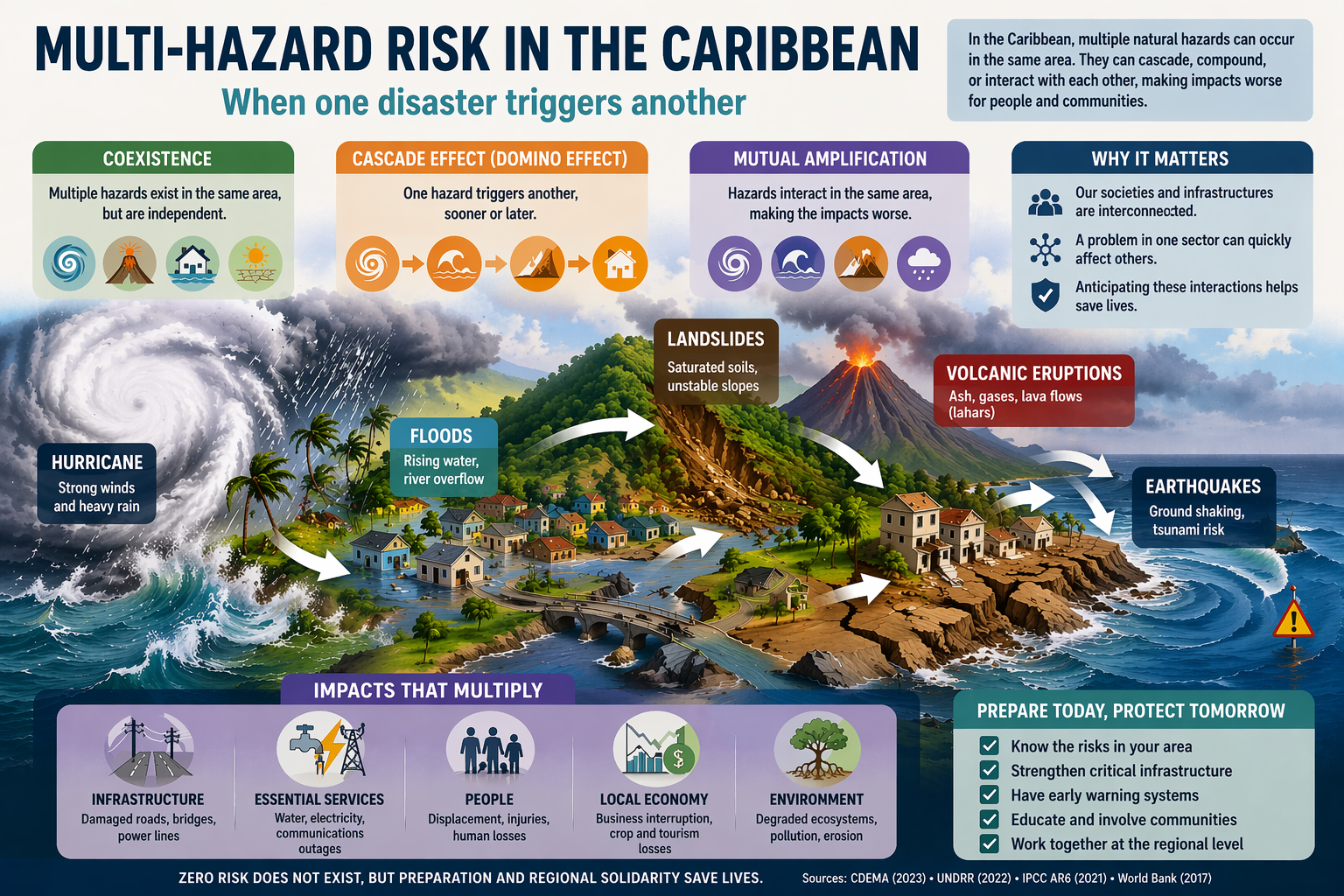
Multi-hazard risk refers to a situation in which several types of disasters can affect the same area, according to different dynamics:
Coexistence
Multiple hazards exist in the same geographic area but are independent
Cascade effect (or domino effect)
One hazard triggers another, more or less close in time
Mutual amplification
Multiple hazards interact in the same geographic area, exacerbating the impacts
The domino effect refers to a chain reaction triggered by an initial event that sets off a series of subsequent, so-called secondary disasters.
Examples of Multi-Hazard Risks in the Caribbean
An earthquake triggering a tsunami warning in the Caribbean
On January 28, 2020, a magnitude 7.7 offshore earthquake struck the Caribbean Sea (hazard #1), between Jamaica, Cuba, and the Cayman Islands. It occurred at a depth of 10 km below the sea, which immediately triggered a tsunami warning in several countries in the region (hazard #2).
Although no tsunami was ultimately recorded, this case remains emblematic of the domino effect: an earthquake can trigger a tsunami.
Hurricane Maria in Dominica
In September 2017, Hurricane Maria, a Category 5 storm, devastated Dominica with winds exceeding 250 km/h. The country suffered catastrophic damage, including the near-total loss of its power grid and impassable roads.
But the impacts did not stop there, due to the domino effect and mutual amplification:
- Massive flooding caused by heavy rains
- Landslides in weakened mountainous areas
- Drinking water outages in the weeks that followed
- Isolation of certain communities due to impassable roads
Why it is important ?
Because our communities, regions, and infrastructure are all interconnected. A problem in one sector can quickly affect others: healthcare, transportation, drinking water, the local economy…
Anticipating these interactions allows us to be better prepared, avoid surprises, and save lives.
Find out more in the “How to Stay Safe” section of the Caribbean Risks portal.
DRR face to multi-hazard
These situations are also referred to as “compound events” in the scientific literature and are receiving increasing attention in risk management policies. They promote cross-sectoral cooperation, improved risk communication, and enhanced regional resilience.