Resources
Miscellaneous resources
AlertCata APP STORE Catastrophe Alert Application: alert and prevention, the culture of risk and resilience in your pocket
First aid – IFRCApplication of first aid actions in emergencies – learning about the actions to adopt and perform via quizzes – emergency numbers to contact in my region and during my travels.
Voices in resilience – Podcast on the prevention of natural disasters and the resilience of populations
Meteo Tsunami – NOAA. Podcast on the formation of tsunamis of meteorological origin. (English)
Preparation for and response to hurricane– NOAA. Podcast on preparing for hurricanes. (English)
La Soufrière of Yesterday and Today
When the Earth Rumbles: Living with the Risk
Resilient Caribbean: Nature-Based Solutions – IFRC. Nature-based solutions to address disasters, the example of Grenada, Jamaica, and the Dominican Republic.
Serious Game Stop Disasters – Online Game: Protect My Island from Natural Disasters
Quiz on the risks – Quiz : is this what I know to recognize the risk ?
When the Earth Rumbles: Living with the Risk - Fun Mini-Game to Simulate a Volcanic Eruption, an Earthquake, a Tsunami
Paré zot – French red cross. Board game online to learn about the natural hazards in Guadeloupe and have fun. (French)
Resources CADRIM – IFRC. Resources on Disaster Risk Management. (English)
Interactive map of risks – UNDRR. Interactive Map of Current Risks in the Caribbean Territories, Members of CDEMA.
Think Hazard – GFDRR. Identify the Natural Risks to Which My Territory Is Exposed and Learn How to Reduce Their Impact.
English version : https://thinkhazard.org/en/
Spanish version : https://thinkhazard.org/es/
Resources by type of risk
Caribbean Community Climate Change Centre – Presentation of projects to combat climate change and for environmental preservation in the Caribbean
Molokoi – Social and solidarity enterprise supporting companies towards ecological transition. Popularization articles for the general public on climate change, biodiversity, and ecological transition
Planetman against climate change – Climate Action Network France. Comic strip to explain everything about how to reduce one's impact on the climate. (French)
CDEMA hurricanes – Information on cyclones and preparation advice
Atlas of hurricanes in the French west Indies – Site for the general public based on weather archives of cyclone and storm events. Rather technical information despite targeting the general public (still somewhat informed)
Georisques volcanoes – Definitions of volcanic eruptions, the right reflexes, preparing oneself
UWI preparation volcanic eruptions– Explanations of the link between research, monitoring, and public awareness in risk mitigation to face earthquakes.
Definition presentation of the history of the volcanoes
Risk 972 - Prefect of Martinique. Explanation of the phenomenon, hazards, how to protect oneself, and past eruptions in the Lesser Antilles. (French)
CDEMA Earthquakes – Information on earthquakes and preparation advice
Geohazards earthquake – Definitions of earthquakes, the right reflexes, preparing oneself
UWI Earthquakes – Explanations of the link between research, monitoring, and public awareness in risk mitigation to face earthquakes.
Definition, presentation of the history of earthquakes in the Caribbean since 1600, etc.
UWI map of earthquakes – Maps of the Caribbean showing earthquakes from recent months to the most recent
Earthquakes live in the Caribbean – A map and a list of earthquakes in Martinique and Guadeloupe
Georisques floods – Definitions of floods, the right reflexes, preparing oneself
The flood – NEMO - Government of Saint Vincent and the Grenadines. Explanations to understand what floods are, how to deal with them and protect oneself before, during, and after the disaster. (English)
Georisques ground movement – Definitions of land movements, the right reflexes, preparing oneself
Ground movement – NEMO – Government of Saint Vincent and the Grenadines. Explanations to understand what land movements are, how to deal with them and protect oneself before, during, and after. (English)
UWI preparation tsunami – Explanations of domino effects, definitions, research on Caribbean tsunamis, preparation, etc.
UNESCO The Caribbean Tsunami Information Center – Information on ongoing projects in the Caribbean Region (among others) on tsunamis. Some resources on preparation.
University of Montpellier_Projet FEAT – Explanations on tsunamis, interactive evacuation plans and refuge zones for the French Antilles
Risk coastlines – Geohazards – French Government. Resource to understand what a tsunami is, its risks, the useful actions to protect oneself, and the available French subsidies. (French)
Resources by territory
- Antigua and Barbuda
- Bahamas
- Barbados
- Dominica
- Grenada
- Guadeloupe
- Haiti
- Jamaica
- Martinique
- Montserrat
- Dominican Republic
- Saint Kitts and Nevis
- St Lucia
- Saint Vincent and the Grenadines
- Saint-Martin
- Saint-Barthelemy
- Trinidad and Tobago
Think Hazard – Antigua-and-Barbuda – Estimate the risk levels and know the recommendations on my island
NODS Antigua and Barbuda – National Office of Disaster Services
The Antigua and Barbuda Weather Services – Antigua and Barbuda Weather
Antigua and Barbuda – Historical Natural Disasters – Portal – Historical data on the disasters that have affected Antigua and Barbuda: types of risks and frequency; human, economic, and material losses
Bahamas Weather Services – Government of the Bahamas.
Think Hazard – Barbadian – Estimate the risk levels and know the recommendations on my island
BarbadosBRB – Historical Natural Disasters – Portal - Historical data on disasters: types of risks and frequency; human, economic, and material losses
Think Hazard – Dominique –Estimate the risk levels and know the recommendations on my island
ODM Dominica – National Office of Disaster Services
Dominica Meteo Services – Weather Dominique
Dominica – Historical Natural Disasters – Portal – Historical data on the disasters that have affected Dominica: types of risks and frequency; human, economic, and material losses
Think Hazard – Granada – Estimate the risk levels and know the recommendations on my island
National Disaster Management Agency (NaDMA) – National Office of Disaster Services
GrenadaGRD – Historical Natural Disasters – Portal - Historical data on disasters: types of risks and frequency; human, economic, and material losses
Think Hazard – Guadeloupe – Estimate the risk levels and know the recommendations on my island
The risk of tsunami in the Caribbean – EXPLOIT. Prepare for an evacuation in case of a tsunami alert in the Antilles: risks, evacuation plans, and instructions. (French)
Guadeloupe Meteo Services – Ggovernment French. (French)
The west Indies – France earthquake – This page lists the latest earthquakes that have occurred in the French Antilles or nearby. (French)
Guadeloupe – Historical Natural Disasters – Historical data on disasters: types of risks and frequency; human, economic, and material losses. (English)
ATLAS of hurricanes in the French west Indies – Site listing weather archives of hurricanes since 1950. (French)
Think Hazard – Haiti Estimate the risk levels and know the recommendations on my island
Haiti – Historical Natural Disasters – Portal – Historical Natural Disasters – Portal – Historical data on disasters: types of risks and frequency; human, economic, and material losses. (English)
Think Hazard – Jamaica – Estimate the risk levels and know the recommendations on my island
Jamaica – Historical Natural Disasters – Historical data on disasters: types of risks and frequency; human, economic, and material losses. (English)
Earthquake UWI Mona Jamaica – University of the West Indies Mona Campus. Unit that manages earthquake monitoring in Jamaica – interactive earthquake map. (English)
Think Hazard – Martinique – Estimate the risk levels and know the recommendations on my island
The risk of tsunami in the Caribbean – Prepare for an evacuation in case of a tsunami alert in the Antilles: the risks, evacuation plans, and instructions
Martinique Meteo Services – Ggovernment French. (French)
Natural Hazards 972 – Prefet of Martinique. Site information and prevention of the DEAL to the public martinique on the natural hazards present in Martinique. Historical past disasters on the territory. (French)
Martinique – Historical Natural Disasters – Historical data on disasters: types of risks and frequency; human, economic, and material losses. (English)
The west Indies – France earthquake – This page lists the latest earthquakes that have occurred in the French Antilles or nearby
ATLAS of hurricanes in the French west Indies – Website listing weather archives of hurricanes since 1950
Think Hazard – Montserrat – Estimate the risk levels and know the recommendations on my island
Montserrat – Historical Natural Disasters – Historical data on disasters: types of risks and frequency; human, economic, and material losses. (English)
Think Hazard – Dominican Republic Estimate the risk levels and know the recommendations on my island
Dominican Republic – Historical Natural Disasters – Historical data on disasters: types of risks and frequency; human, economic, and material losses. (English)
Think Hazard – Saint-Kitts-and-Nevis – Estimate the risk levels and know the recommendations on my island
NEMA St Kitts – Nevis – National Office of Disaster Services
St. Kitts and Nevis – Historical Natural Disasters – Portal - Historical data on disasters: types of risks and frequency; human, economic, and material losses
Think Hazard – Sainte-Lucie – Estimate the risk levels and know the recommendations on my island
NEMO – St. Lucihas – National Office of Disaster Services
Meteo St Lucia – Weather forecast
St. Lucia – Historical Natural Disasters – Portal - Historical data on disasters: types of risks and frequency; human, economic, and material losses
Think Hazard – Saint-Vincent-et-les Grenadines – Estimate the risk levels and know the recommendations on my island
National agency of risk management –NEMO. National Bureau of services in the event of a disaster. (English)
NEMO Saint Vincent – Grenadines– National Office of Disaster Services
Saint Vincent – Grenadines Meteo Services – Government of Saint Vincent and the Grenadine. (English)
St. Vincent and the Grenadines – Historical Natural Disasters – Historical data on disasters: types of risks and frequency; human, economic, and material losses. (English)
Think Hazard – Saint Martin – Estimate the risk levels and know the recommendations on my island
Saint Martin Meteo Services – French Government. (French)
Saint Martin – Historical Natural Disasters – Historical data on disasters: types of risks and frequency; human, economic, and material losses. (English)
Saint Barthelemy Meteo Services – Weather Saint Barthélémie
Saint-Barthelemy – Historical Natural Disasters – Historical data on disasters: types of risks and frequency; human, economic, and material losses. (English)
Think Hazard – Trinidad and Tobago – Estimate the risk levels and know the recommendations on my island
Trinidad and Tobago – Historical Natural Disasters – Historical data on disasters: types of risks and frequency; human, economic, and material losses. (English)
Publications
Latest articles
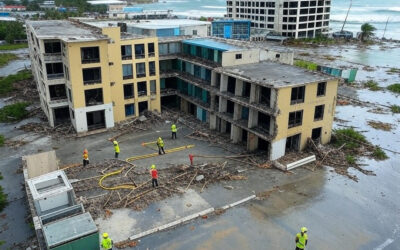
The 4 paths of action for the Reduction of Disaster Risk
Tsunamis, hurricanes, earthquakes, floods... in the Face of these natural hazards more intense, a priority is necessary : to prevent, rather than suffer.This is the challenge of Disaster Risk Reduction (DRR). But what lies there really behind this concept ?...
Frequently asked Questions
Use the RRC Portal
Who exactly is this portal for? to who exactly ?
For any person residing or traveling in the Caribbean, local communities, associations, emergency services or schools, who wish to inform themselves, prepare or raise awareness among their surroundings about natural risks.
I'm not an expert: how to understand the contents of the portal?
Each page of the portal is designed in a clear and popularized way. You can also consult the glossary to better understand the technical terms.
Is the portal available in multiple languages?
Yes, the content is accessible in French, English, and Spanish. You can change the language at any time in the menu at the top right.
What are the interactive maps for?
The interactive map allows you to visualize the risks on my island. As well as past natural disaster events on my island.
Understand the risks
What are the natural risks covered by the portal?
The portal deals including seismic risk, volcanic, cyclonic, flood, marine flooding, landslides, tsunamis and climate change.
Are all Caribbean territories exposed to the same risks?
No. Each territory has its own characteristics. This is why the portal offers entry “by territory” with content to be localized and adapted.
I prepare efficiently
Where to start if I want to prepare myself to be a risk ?
Go to the topic “Protect”. You'll find practical worksheets, checklists, instructions, and links to local resources.
What is an emergency bag and how to prepare it ?
It is a bag containing everything needed to survive for 72 hours in battery life. A detailed fact sheet is available on the portal to guide you in its preparation.
What if I live with an elderly person, disabled or a baby ?
The portal offers a specific section is dedicated those with special needs, with resources to specific web sites according to the patterns (reduced mobility, pathologies, children, etc.).
In case of an emergency or disaster
Where to find formal direction in the case of an alert ?
They are relayed by the local authorities (prefectures, municipalities), but the portal also allows you to access the resources and good reflexes to adopt depending on the type of alert
How do I know if I have to evacuate ?
Only the authorities can order an evacuation. Follow their instructions via radio, social networks, official or mobile alerts. The portal will also tell you the signals to recognize.
What if I live with an elderly person, disabled or a baby ?
The portal offers a specific topic dedicated to people with special needs, with concrete advice according to the patterns (reduced mobility, pathologies, children, etc.).
Specific needs and practical issues
This portal is used by people who are blind or hard of hearing ?
Yes, the interface is thought to be the most accessible possible. In addition, the content can be tailored according to the needs (texts , contrast, simplified navigation). Click on the icon accessibility in the bottom right.
I'm a teacher : can I use the portal resources in the classroom ?
Absolutely. The portal provides teaching tools, videos, worksheets to print, ideas and educational activities to raise awareness among students.
Glossary
A disaster is a serious disruption of the functioning of a community or a society at any scale due to hazardous events interacting with conditions of exposure, vulnerability, and capacity, leading to one or more of the following: human, material, economic, and environmental losses and impacts. (UNDRR)
The vulnerability is defined by the characteristics and circumstances of a community or system that make it susceptible to the effects of a hazard. (UNDRR)
Exposure is the situation of people, infrastructure, housing, production capacities, and other tangible human assets located in hazard-prone areas. (UNDRR)
The capacity is the combination of all the strengths, attributes, and resources available within an organization, community, or society to manage and reduce disaster risks and strengthen resilience. (UNDRR)
Le Risk is the combination of the probability of an event and its negative consequences. Risk translates into the potential loss of human lives, injuries, or destroyed or damaged property that could occur to a system, society, or community in a given period, determined probabilistically based on hazard, exposure, vulnerability, and capacity .Risk is the product of hazard (an event likely to harm people, property, and/or the environment) and a stake (persons, property or the environment) is likely to suffer injuries and damages. (UNDRR ; Ministry of the ecological transition and territorial cohesion)
Risk = hazard x stake
A hazard is a dangerous phenomenon, substance, human activity, or condition that may cause loss of human lives, injuries or other health impacts, property damage, loss of livelihoods and services, social and economic disruptions, or environmental damage. (UNDRR)
A natural hazard is a natural process or phenomenon that may cause loss of human lives, injuries or other health impacts, property damage, loss of livelihoods and services, social and economic disruptions, or environmental damage. (UNDRR)
The Stakes are the people, property, systems, or other elements present in hazard zones that are thereby subject to potential losses. (UNDRR)
Le Danger results from a process, phenomenon, or human activity that may cause loss of human lives, injuries or other health consequences, property damage, social and economic disruptions, or environmental degradation. (UNDRR)
A flood corresponds to the temporary submersion of areas usually out of water. It can be due to the overflow of a watercourse; urban runoff; groundwater rise; marine submersion. (Georisques)
The Earthquakes or tremor are ground shakes resulting from the sudden release of energy along a fault. (Georisques)
The Tropical cyclones are also known as hurricanes or typhoons, depending on the region. A tropical cyclone is a storm in a quicker rotation that starts above the tropical oceans and the speed, the size and intensity can vary. (World Meteorological Organization)
A storm is characterized by a strong wind, usually accompanied by heavy rainfall, storms can cause significant damage to human and material resources. (Georisques)
The Eruptions volcanic can be divided into two types : explosive and effusive.
An explosive eruption emits materials at high temperature, but, for the most part solid, and releases a large amount of gas.
An eruption effusive, she rejects the fluid lava that flows along the slopes.
(Georisques)
Risk coasts :
- The marine flooding occurs during storms when the sea level rises by several meters and waves can penetrate inland, causing coastal flooding. These can last from a few hours to a few days. Some are harmless, but others can be dramatic.
- The Tsunamis can reach several tens of meters in height. Caused by an earthquake, volcanic eruption, or underwater landslide, these waves begin with a retreat of the sea far from the coasts, before rising very quickly, generating violent and destructive currents.
The Landslides are natural displacements of soils and subsoils. Their occurrence depends on many parameters, such as the nature of the soil, the configuration of the places, on the surface and underground, or the weather.
These movements can be classified into two categories :
- slow movements, which deform gradually the ground and eventually damage to the buildings ;
- fast movementssudden and brutal, that may endanger persons and cause significant damage.
Le Climate represents the average weather conditions observed at a specific location over a long period, ranging from a few months to thousands or millions of years. The WMO uses a 30-year period to determine the average climate. (World Meteorological Organization)
Le Climate change corresponds to all changes in the climate system that persist over the long term (longer than a weather event). There are two definitions proposed by the UNDRR:
(a) A change in the state of the climate that can be identified (e.g., using statistical tests) by changes in the mean and/or the variability of its properties, and that persists for an extended period, typically decades or longer. Climate change may be due to natural internal processes or external forcings, or to persistent anthropogenic changes in the composition of the atmosphere or in land use. The Intergovernmental Panel on Climate Change (IPCC) The intergovernmental panel on climate change (IPCC)
(b) A change of climate which is attributed directly or indirectly to human activity that alters the composition of the global atmosphere and which is in addition to natural climate variability observed over comparable time periods. The United Nations Framework Convention on Climate Change (UNFCCC) The United Nations Framework Convention on climate change (UNFCCC)
Concept and practice of the risk reduction through efforts to analyze and manage their causes, including by reducing exposure to hazards, which helps reduce the vulnerability of people and property, wise management of land and the environment, and improved preparedness for adverse events. (UNDRR)
The risk management is a systematic process of using administrative directives, operational skills, capacities, and organizations to implement appropriate policies, strategies, and response capacities to mitigate the impact of natural hazards and related environmental and technological disaster risks. (UNDRR)
The prevention is the set of activities aimed at completely avoiding the adverse impact of hazards and minimizing related environmental, technological, and biological disasters. (UNDRR)
L’Mitigation of natural hazards is achieved by reducing or minimizing the negative impacts of a hazardous event through various strategies and actions. Mitigation measures include engineering techniques and hazard-resistant constructions, as well as improved environmental and social policies and public awareness. (UNDRR)
The disaster preparedness translates into the knowledge and capacities developed by governments, response and recovery organizations, communities, and individuals to effectively anticipate, respond to, and recover from the impacts of likely, imminent, or current disasters. (UNDRR)
L’Disaster intervention are the measures taken directly before, during, or immediately after a disaster to save lives, reduce health impacts, ensure public safety, and meet the basic subsistence needs of the affected people. (UNDRR)
Le Recovery corresponds to the restoration or improvement of livelihoods and health, as well as goods, systems and economic activities, physical, social, cultural and environmental, a community or a society affected by a disaster, in accordance with the principles of sustainable development and the " rebuilding for the better ", in order to avoid or reduce the risk of disaster in the future. (UNDRR)
The resilience is the ability of a system, community or society exposed to hazards to resist, absorb, adapt to, transform and recover from the effects of a hazard in a timely and effective manner, including through the preservation and restoration of its structures and basic vital functions through risk management. (UNDRR)
Early warning
Monitoring system that detects, monitors, and communicates relevant information about potential disaster risks, to enable the population and authorities to react in time to avoid or limit the impacts.
Evacuation
Organized process to temporarily move people out of a risk area to a safe place, with the aim of protecting them in case of an imminent threat.
Crisis management Plan
Strategic document defining the procedures to follow, responsibilities, and mobilizable resources before, during, and after a critical event, to limit its impacts and ensure a coordinated response.
Bag / emergency bag emergency
Set of essential supplies (water, food, documents, first aid kit, flashlight, radio, clothing, etc.) to prepare in advance, allowing to cope with the first hours of a disaster or evacuation.
Combined risk / cascade
Situation where multiple risks occur simultaneously or successively, leading to amplified effects. These risks can be natural, technological, or health-related, and their interactions increase the complexity of management.
People with special needs
Individuals who, due to their age, physical, mental, social, or economic condition, may face increased difficulties in disasters (reduced mobility, elderly, pregnant women, children, homeless, etc.).
Self-protection
Set of actions and reflexes that each individual or family can adopt to prepare for a hazard (e.g., take shelter, prepare an emergency kit, follow safety instructions).
Risk Culture
Knowledge, attitudes, and behaviors of a society that influence how individuals perceive, anticipate, and protect themselves against hazards. Strengthening this culture helps better prepare and limit losses.
Menu
Home
Natural hazards
Protect
Risks on each island
The toolbox
About
Quick access
Resources
Glossary
Contact
FAQ
Cookie policy (EU)
Pirac
OECS
CDEMA